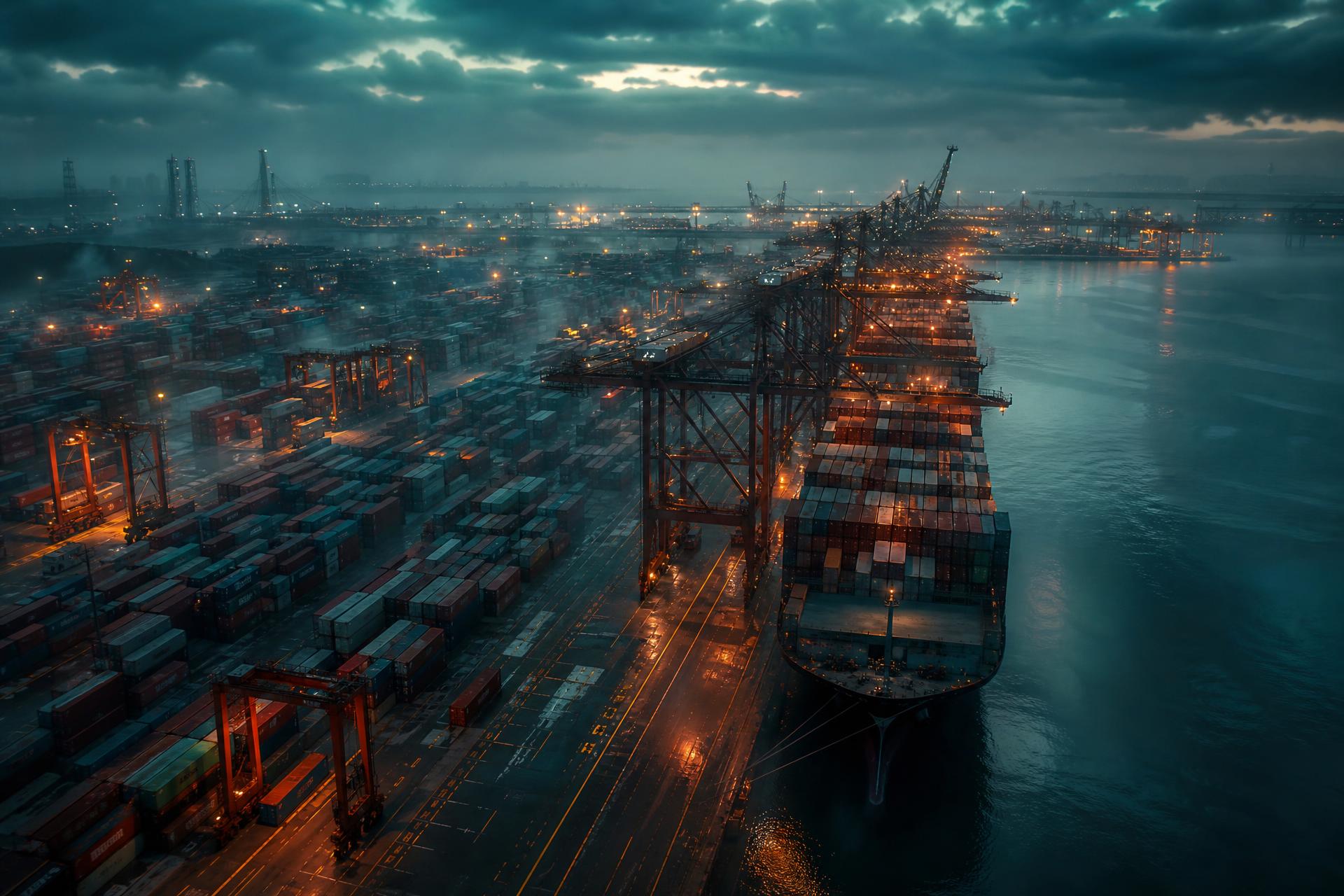
Technical import, from the supplier to your operation.
We structure import operations with tax diagnostics, international contracts, logistics, and customs clearance coordinated by a single team responsible for the account.
This service fits when…
Companies that purchase abroad on a recurring or occasional basis and need predictability of cost, lead time, and compliance — without maintaining a dedicated internal structure.
- 01
Industries with imported inputs
Components, raw materials, chemicals, packaging, and production machinery.
- 02
Distributors and specialized retail
Finished products of Asian, European, or North American origin for resale in the domestic market.
- 03
Companies in import ramp-up
Commercial teams that have purchased a few times and need to professionalize the process before scaling volume.
- 04
Groups with their own operation
Internal departments that need technical support in niches: tax engineering, special regimes, or channel unblocking.
What JD Trade takes off your plate.
Where import usually gets stuck — and what we solve before the goods are shipped.
Unexpected customs cost
Questionable NCM, poorly structured tax base, or incorrectly applied tax regime increase the final cost. We perform a prior review.
Retention in yellow or red channel
Inconsistent documentation, aggressive valuation, or dubious origin lead to inspection. We audit the dossier before DI registration.
Supplier without due diligence
Contracts without quality, deadline, or penalty clauses expose the buyer. We approve and negotiate with legal backing.
Exchange and international payment
Absence of exchange policy and improper use of exchange contract generate hidden costs and regulatory risk.
Fragmented logistics
Origin, international freight, customs clearance, and last mile with disconnected suppliers. We consolidate under a single coordination.
What's included.
Standard scope of the operation. The plan is adjusted according to the account diagnostic.
- 01
Prior diagnostic
Analysis of NCM, applicable taxes, applicable regime, appropriate INCOTERM, and feasibility of special regimes.
- 02
Sourcing and approval
Prospecting and qualification of international suppliers, documentary audit, and commercial negotiation.
- 03
International contract
Drafting and review of the purchase agreement, INCOTERMS, quality, deadline, penalty, and jurisdiction clauses.
- 04
Exchange and payment
Structuring of exchange closing, choice between remittance, letter of credit, or documentary collection, and coordination with the bank.
- 05
International logistics
Contracting of freight, insurance, warehousing, and domestic transport to the final destination, with unified traceability.
- 06
Customs clearance
DI registration, tax management, channel monitoring, and release of goods at port, airport, or border.
- 07
Post-clearance
Cost reconciliation, tax calculation memory, and support in credit appropriation when applicable.
Operational method.
We work as a project team: an account commercial manager, a customs technician, and operational support. You speak with named people, not a protocol.
- Principle 01
Diagnostic before proposal
We do not issue a scope without understanding NCM, tax regime, origin, and volume. This avoids rework later.
- Principle 02
Single plan document
Scope, deadlines, milestones, and responsibilities are in an operational plan accessible to the client.
- Principle 03
Communication per account
One channel per operation with traceable history. No rotating intermediaries.
- Principle 04
Closing with calculation memory
At the end, we deliver the tax and logistics memory of the operation for accounting reconciliation.
How an operation reaches the finish line.
- 01Stage
Diagnostic
Survey of goods, NCM, origin, volume, and commercial objective. Analysis of tax and logistics feasibility.
- 02Stage
Structuring
Definition of supplier, INCOTERM, mode, payment method, and tax regime. International contract reviewed.
- 03Stage
Commercial closing
Purchase order, exchange closing, international freight and insurance contracting. Shipment scheduling.
- 04Stage
Shipment and transit
Issuance of B/L/AWB/CRT, transit monitoring, and pre-registration of documents with the customs broker.
- 05Stage
Customs clearance
DI registration, tax payment, channel management, and cargo release at the entry point.
- 06Stage
Delivery and reconciliation
Domestic transport, delivery to the final destination, and closing with calculation memory and credit reconciliation.
Documents we usually request.
Customary required documents. The final list depends on the NCM, country of origin, and applied regime.
Qualification and registration
- Valid operational RADAR qualification
- Articles of incorporation and amendments
- Latest DEFIS / DRE
- Proof of financial capacity when required by the RFB
Commercial and exchange
- Commercial invoice and packing list
- Purchase order and international contract
- Proof of exchange rate closing
- Letter of credit or payment instrument, when applicable
Logistics and regulatory
- B/L, AWB, or CRT according to mode
- Certificate of origin, when an applicable tariff agreement exists
- Specific licenses (Anvisa, Mapa, Anatel, Inmetro, etc.) according to NCM
- Technical sheet and reports required by consenting bodies
Available models.
Public regimes that may be applicable according to the merchandise, origin, and use. Feasibility is assessed on a case-by-case basis — there is no automatic benefit.
Direct import
Company imports in its own name via its RADAR. Recommended when volume justifies internal structure.
Import on behalf and order
Trading company imports in its own name at the request of the indicated acquirer. Useful for companies without a RADAR suitable for the volume.
Import by order
Trading company imports on its own account and resells to the ordering party. Used to simplify the process and concentrate exchange rate risk.
Drawback
Tax suspension/exemption regime for inputs linked to a product to be exported. Subject to qualification and fulfillment of the export commitment.
Recof and related regimes
Special customs regimes for industries that meet production and control requirements. Mandatory prior assessment.
Ex-tarifário
Temporary reduction of II for capital goods and IT goods without equivalent national production, through petition and resolution.
What changes with JD Trade running it.
- 01
Integrated model
Diagnosis, contract, logistics, and customs clearance with the same team — without transferring responsibility between suppliers.
- 02
Prior dossier audit
We review documents, NCM, and valuation before DI registration, reducing the probability of a yellow or red channel.
- 03
Technical interlocution
Each account is managed by a named customs professional, not by a service protocol.
- 04
Memory delivered to the client
At the end, the client receives the tax and logistics memory of the operation — not just the service note.
What the right structure prevents.
Fines for incorrect classification
An incorrect NCM generates tax differences, fines, and interest. Prior audit eliminates the most frequent problem.
Prolonged retention
Inconsistent documents or poorly proven origin can keep cargo in customs bonded warehouses for weeks — with increasing storage costs.
Loss of tax benefit
A special regime requested out of time or without the required prerequisites generates liabilities instead of savings.
Irregular exchange
Inadequate closing or outside the scope of the exchange contract exposes the company to BCB inspection.
Common questions before hiring.
01Do we need our own RADAR to import with JD Trade?+
Not necessarily. Operations on behalf and order or by order waive the acquirer's own RADAR. When there is an intention to scale, we evaluate dedicated RADAR qualification with the appropriate modality for the volume.
02Do you guarantee tax reduction?+
No. We guarantee technical analysis of NCM, applicable regime, and valuation within current legislation. Reduction, when it exists, results from a public regime applicable to the case — never from a commercial promise.
03Do you work with one-off or only recurring imports?+
Both. One-off operations are handled on a project basis; recurring operations enter an account model with SLA and periodic operational meetings.
04N::: Who is responsible for the DI?+
N::: The DI is registered by the responsible customs broker for the operation. The scope, deadlines, and dossier review are coordinated by the JD Trade team in conjunction with the client.
05N::: How is the service priced?+
N::: It depends on the scope: it can be a fee per operation, a monthly retainer in an account model, or remuneration by spread when we operate as a trading company. The model is defined during the diagnosis.
Shall we assess your structured import operation?
Tell us the scenario. We run a technical screening before proposing scope — no generic material sent out.
- →N::: Export
N::: Do we purchase imported inputs within a chain that also exports? It's worth evaluating special customs regimes.
- →N::: Trading and COMEX outsourcing
N::: No RADAR or internal structure? We can operate as your trading company and take over the complete operation.
- →N::: Consulting and RADAR
N::: If the goal is to internalize the operation, we support RADAR qualification and department design.