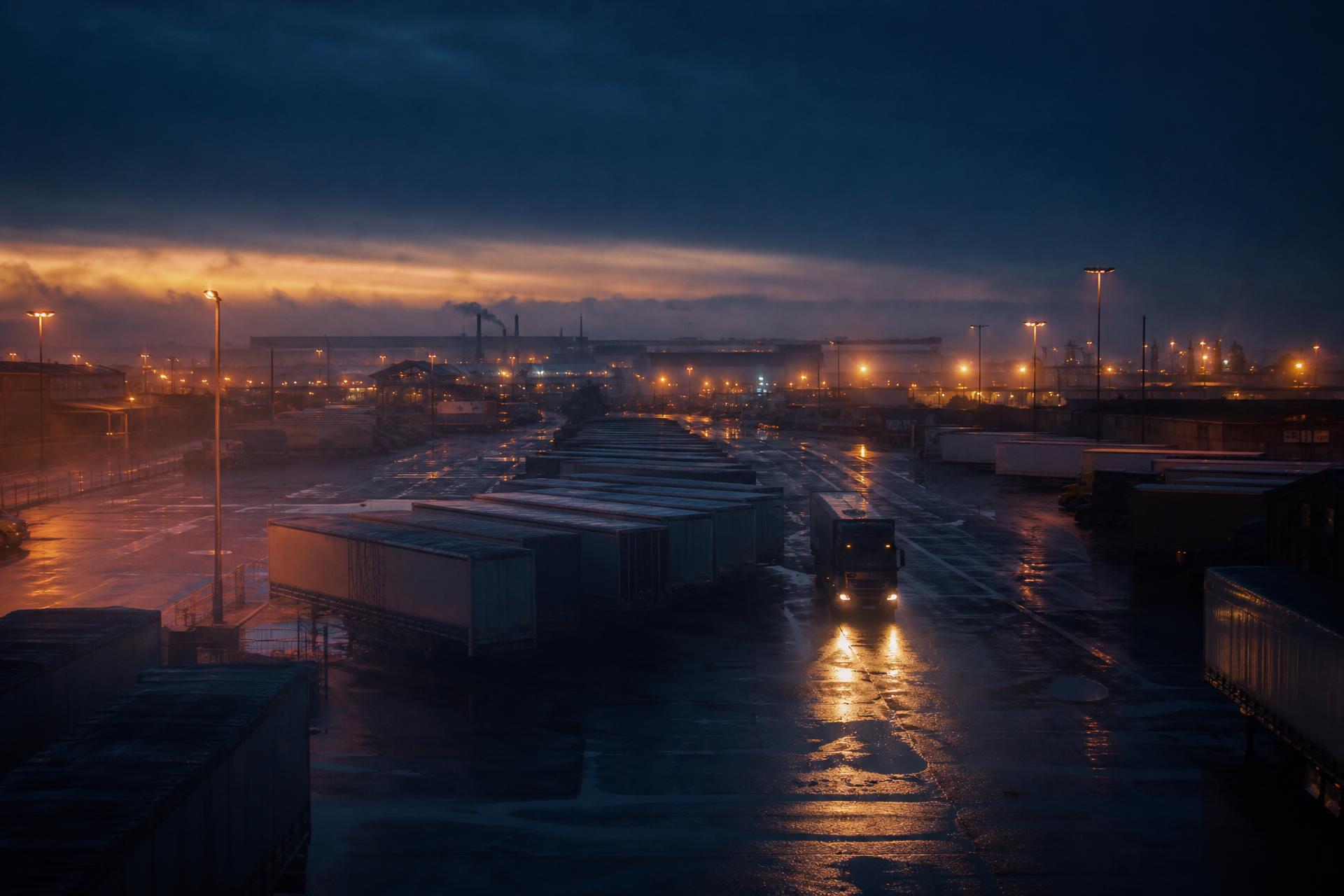
Domestic distribution, from warehouse to final recipient.
Coordination of domestic distribution of already cleared goods — network of approved carriers, continuous traceability, and SLA defined per route.
What this operation is for.
Deliver already nationalized goods to the final recipient — B2B client, store, marketplace, or end consumer — with predictable lead times, proof of delivery, and occurrence management.
Typical scenarios.
Recurring B2B deliveries
Distribution to networks, industries, or distributors in multiple states.
Post-clearance operations
Pickup from bonded warehouse and direct shipment to recipient without passing through own warehouse.
Distribution for marketplaces
Sending inventory for marketplace fulfillment or delivery to DCs of major accounts.
Expansion to new markets
Need for a network in regions where the company does not have an approved carrier.
Modalities available in this layer.
- 01
Less Than Truckload (LTL)
Smaller loads consolidated on route. Cost by weight; longer lead time due to consolidation.
- 02
Full Truckload (FTL)
Dedicated vehicle for large volumes or sensitive deliveries.
- 03
Milk-run
Planned route with multiple stops — collection or delivery in an optimized sequence.
- 04
Urban distribution / last mile
Urban stretches with vehicles suitable for municipal restrictions and delivery windows.
- 05
Cross-docking
Quick passage through a terminal without storage — optimizes time between international mode and final recipient.
From start to close-out.
- 01Stage
Receipt of cleared inventory
Arrival of cargo at the logistics warehouse or consolidation point.
- 02Stage
Route planning
Network definition, SLA per region, and selection of approved carrier.
- 03Stage
Cargo preparation
Labeling, unitization, CT-e issuance, and compliance checklist.
- 04Stage
Collection and monitored transit
Scheduled collection and continuous traceability until delivery.
- 05Stage
Delivery and proof
Delivery with electronic proof, occurrence management, and return of delivery receipt when required.
Usual documents.
- Outbound invoice (NF-e)
- Bill of Lading (CT-e)
- MDF-e
- Electronic proof of delivery
- Occurrence report for damages
- Transport insurance policy
Who does what.
What technical coordination prevents.
Inconsistent SLA between regions
Routes with different carriers in each location generate unequal deadlines and experiences.
Damages in last mile
Urban distribution with multiple handling increases the risk of damage. Correct packaging and adequate insurance are mandatory.
Refusal due to document
Incorrect NF-e or incompatible CT-e leads to refusal of delivery and return of cargo.
Municipal restrictions
Vehicle rotation, environmental zone, or restricted hours require a suitable vehicle for the city.
How we operate, transparently.
The distribution operation is executed by approved carriers in each location, under the coordination of JD Trade. We do not operate our own fleet. Contracts and policies are structured to provide continuity of responsibility to the client.
How this operation connects with the rest.
Details that speed up your quote.
Send the data below so we can respond faster. We don't send generic quotes — every plan is tailored to your operation.
- 01Origin (warehouse) and destinations (cities or states)
- 02Volume per route (weight, cubage, number of deliveries)
- 03Type of operation (less-than-truckload, dedicated, milk-run, cross-docking)
- 04Desired delivery SLA
- 05Need for specific vehicle
- 06Historical occurrences on known routes